
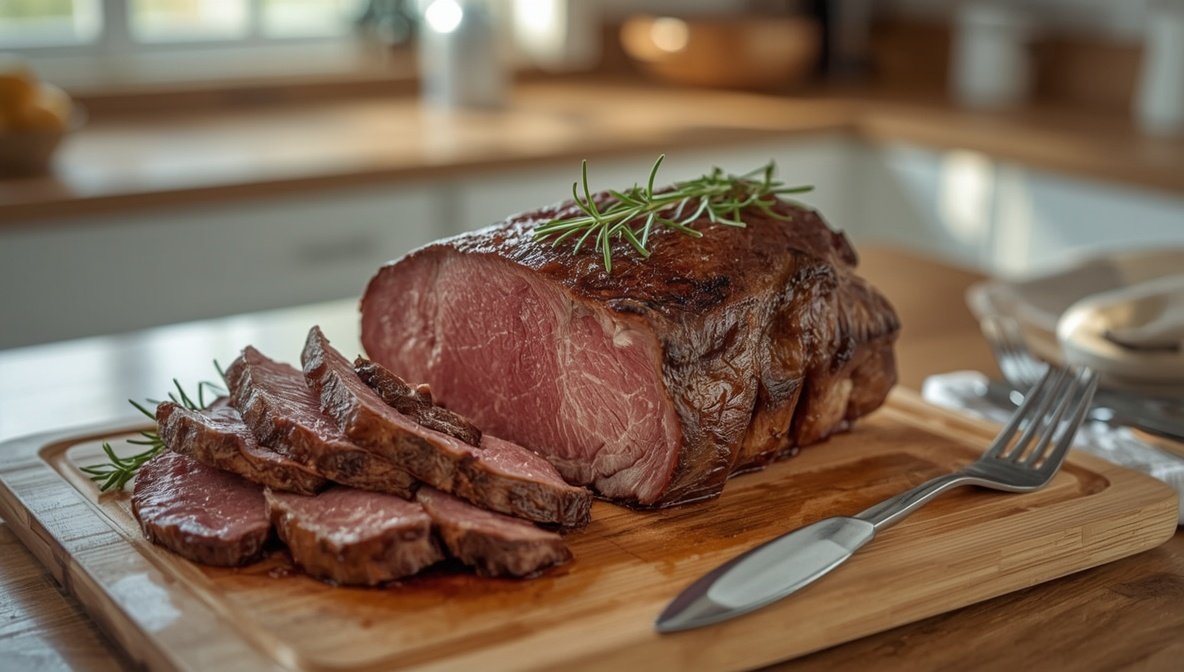
A beef roasting joint needs 20 minutes at 220°C, then 20 minutes per 500g at 180°C for medium-rare, 25 minutes per 500g for medium, or 30 minutes per 500g for well done. Always rest the joint for at least 20 minutes before carving so the juices settle back into the meat.
Quick Answer
Beef roasting joint cooking time: preheat the oven to 220°C (200°C fan), sear the joint at that heat for 20 minutes, then reduce to 180°C (160°C fan) and roast for 20 minutes per 500g for medium-rare, 25 minutes per 500g for medium, or 30 minutes per 500g for well done. A 2kg topside serves six and needs roughly 1 hour 40 minutes total for medium-rare, plus a 20–30 minute rest.
What is the correct cooking time for a beef roasting joint per kg?
The correct cooking time for a beef roasting joint is 40 minutes per kilogram at 180°C for medium-rare, 50 minutes per kilogram for medium, and 60 minutes per kilogram for well done, plus a fixed 20-minute sear at 220°C at the start. A 1.5kg topside therefore needs about 80 minutes for pink-in-the-middle beef.
Which oven temperature gives the best roast beef?
A two-stage oven temperature gives the best roast beef: 220°C (200°C fan, gas mark 7) for the first 20 minutes to seal the outside, then 180°C (160°C fan, gas mark 4) to cook the inside gently. This method browns the fat, locks in juices, and prevents the joint drying out before the centre is ready.
Expert Insight — Eleanor Hayes
I always take my roasting joint out of the fridge a full hour before it goes in the oven. A cold centre pulls the finished internal temperature down by 3–5°C, which is the difference between beautifully pink beef and a grey slice. Room-temperature meat cooks more evenly, browns better on the outside, and holds moisture better on the plate.
How do I know when a beef joint is cooked?
You know a beef joint is cooked by using a meat thermometer pushed into the thickest part, avoiding bone or fat. Aim for 52°C for rare, 57°C for medium-rare, 63°C for medium, and 71°C for well done. The temperature rises another 3–5°C while the joint rests, which is why you always pull it out slightly early.
Which cut of beef is best for roasting?
The three best cuts for roasting are topside, sirloin, and rib. Topside is lean and family-friendly at around £12–£16 per kilogram, sirloin is tender and more marbled at £18–£24 per kilogram, and rib on the bone gives the deepest flavour at £22–£30 per kilogram. Pick topside for a weekday Sunday lunch and rib for special occasions.
Should I sear a beef roasting joint before it goes in the oven?
You do not need a separate stovetop sear if you start the oven at 220°C, because that first 20 minutes at high heat sears the outside for you. Only sear in a pan first if your joint is very small (under 800g) or if you want extra colour on all sides, particularly for a rolled sirloin.
How long should I rest a roast beef joint before carving?
Rest a roast beef joint for at least 20 minutes for a joint up to 1.5kg, and 30 minutes for anything larger. Cover it loosely with foil on a warm plate. Resting lets the muscle fibres relax and the juices redistribute, so the meat stays pink and moist rather than bleeding onto the board.
Why is my roast beef tough or dry?
Roast beef turns tough or dry for four reasons: the oven temperature was too low so the outside never sealed, the joint was overcooked past 65°C internal, it was carved too soon after leaving the oven, or the wrong cut was used. Silverside and brisket need slower, moister cooking than topside, sirloin, or rib.
Do I need to cover a beef joint with foil while roasting?
You do not need to cover a beef roasting joint with foil while it cooks — covering steams it and stops browning. Only tent the joint with foil during the resting stage after it comes out of the oven, or drape a strip over the top for the final 15 minutes if the outside is browning faster than the centre is cooking.
What is the perfect gravy method for roast beef?
The perfect gravy method for roast beef uses the tin drippings, a tablespoon of plain flour, and 500ml of hot beef stock. Pour off most of the fat, keep the brown residue, whisk in the flour over medium heat, cook for one minute, then pour in the stock gradually. Simmer for four minutes and season.
Our Take
A roasting joint is the most forgiving centrepiece for a Sunday lunch as long as you follow two rules: get the meat to room temperature before it goes in, and use a thermometer instead of guessing. Every kitchen oven runs slightly differently, so a 50p probe thermometer is worth more than any timing chart. Once you cook to internal temperature rather than the clock, you will never serve grey beef again.
How do I stop the outside burning before the centre is cooked?
Stop the outside burning by dropping the oven temperature to 180°C after the first 20 minutes, positioning the joint on the middle shelf, and loosely covering the top with foil for the final third of cooking. A splash of beef stock or red wine in the tin also creates steam that slows crust formation.
Which side dishes work best with a roast beef joint?
The traditional British side dishes for a roast beef joint are Yorkshire puddings, roast potatoes, honey-glazed carrots, buttered greens, horseradish sauce, and a red-wine or onion gravy. For a lighter meal, serve slices of cold rare roast beef with a mustard-dressed potato salad and cornichons.
How should I store and reheat leftover roast beef?
Cool leftover roast beef within 90 minutes, wrap it tightly in cling film or an airtight container, and refrigerate for up to three days according to Food Standards Agency guidance. Reheat sliced beef in gravy for four minutes on the hob, or use it cold in sandwiches. Do not reheat beef more than once.
For another classic British roast that follows the same rest-and-carve discipline, take a look at Oven-Baked Gammon Joint: No-Boil Method.
Key Takeaways
- Sear at 220°C for 20 minutes, then drop to 180°C for the rest of the cook.
- Roast at 180°C for 20 minutes per 500g (medium-rare), 25 per 500g (medium), 30 per 500g (well done).
- Pull the joint at internal 52–57°C and let carry-over cooking take it to 57–62°C during rest.
- Rest for at least 20 minutes, uncovered joint on a warm plate, foil loosely tented on top.
- Topside costs roughly £12–£16 per kg and feeds 3 adults per 1kg — a 2kg joint serves 6.
- Refrigerate leftovers within 90 minutes and use within 3 days, per FSA advice.
Frequently Asked Questions
Do you cook roast beef fat-side up or fat-side down?
Cook roast beef fat-side up. As the fat renders during cooking it bastes the joint naturally, keeping the meat moist and adding flavour. Only turn a rolled joint if the tin base is browning much faster than the top, which usually points to an oven that runs hot.
Can I cook a beef joint from frozen?
You can, but it takes about 50 per cent longer and cooks less evenly, so the outside is usually overdone by the time the centre is safe. It is far better to defrost a beef joint slowly in the fridge for 24 hours per kilogram before roasting.
What size beef joint do I need per person?
Buy 350g of raw meat per adult for a joint on the bone, or 250g per adult for a boneless joint. A 1.5kg boneless topside comfortably serves six with a slice or two left for sandwiches the next day.
Is it safe to eat pink beef?
Yes, whole cuts of beef such as topside, sirloin and rib are safe to eat pink once the outside is properly seared, because any bacteria are on the surface and get killed by the searing heat. This is not true of minced beef or burgers, which must be cooked all the way through.
Why should I bring beef to room temperature first?
Bringing a joint to room temperature for 45–60 minutes before roasting means the centre is not still fridge-cold when the crust is done. This gives even cooking edge to edge and prevents the outer ring turning grey while you wait for the middle to catch up.
Can I use a slow cooker for a roasting joint?
A slow cooker is better suited to tougher braising cuts like brisket or silverside than to a proper roasting cut. Topside and sirloin lose the crisp outer crust that defines a Sunday roast when cooked in a slow cooker, so a hot oven remains the traditional method.
Sources
- Food Standards Agency — safe cooking and cooling of meat: food.gov.uk/safety-hygiene/cooking-your-food
- NHS — storing and reheating meat safely: nhs.uk food safety in your kitchen
- BBC Good Food — roast beef timings guide: bbcgoodfood.com how to cook perfect roast beef