
Zuletzt aktualisiert am 17. July 2026
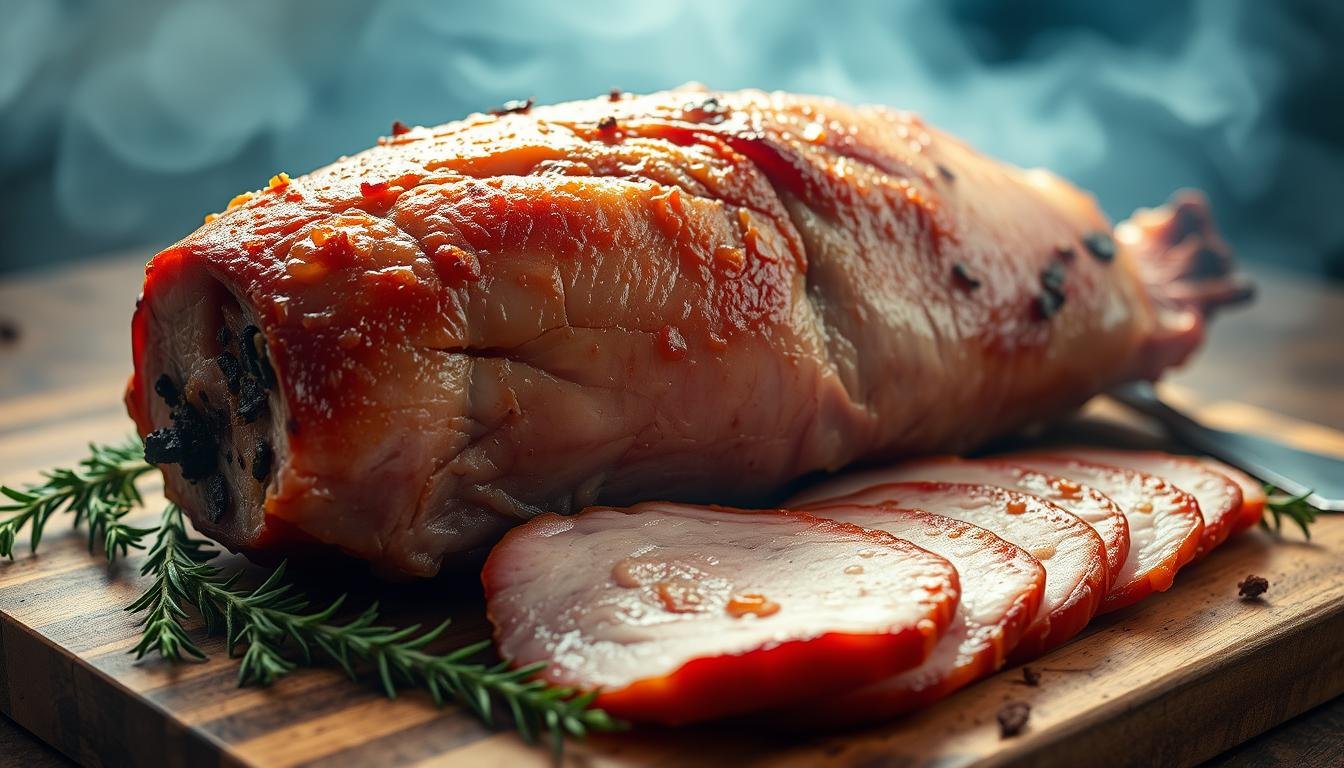
Cooking a gammon joint in the oven without boiling means roasting the cured pork under a tight foil tent at 200°C, steaming the meat in its own juices for roughly 30 minutes per 500g, then glazing it uncovered. Gammon is the raw, salt-cured hind leg of pork; oven-roasting turns it into cooked ham with a caramelised crust and no watery hob stage.
Gammon is raw cured pork; roasting it under foil at 200°C (400°F, gas mark 6) turns it into cooked ham without boiling. Allow 30 minutes per 500g, baste once halfway, then remove the foil for the final 20 minutes to set a honey-and-mustard glaze. Rest the joint 30 minutes and check the core reaches at least 68°C. A 750g joint feeds four; a 2kg joint takes about 2 hours 35 minutes with rest. Reviewed July 2026.
How do you cook a gammon joint in the oven without boiling?
The No-Boil Foil-Tent Method wraps a glazed gammon joint tightly in foil and roasts it at 200°C for 30 minutes per 500g. The sealed foil traps steam, cooking the cured pork evenly while its own juices keep every slice moist, so no hob boiling is needed.
This oven-only method removes the traditional boil-then-roast routine. The foil creates a steam chamber that mirrors what a pan of water would do, but without leaching salt, protein and flavour into discarded liquid. A typical supermarket joint of around 750 grams emerges as an aromatic centrepiece that doubles as economical cold cuts for leftovers.
Follow The No-Boil Foil-Tent Method in six steps:
- Preheat the oven to 200°C (400°F, gas mark 6).
- Massage the joint with a honey, chilli, ginger and dark soy glaze.
- Wrap the gammon tightly in foil and set it in a roasting tin.
- Roast for 30 minutes per 500g, basting once at the halfway point.
- Uncover for the final 20 minutes to caramelise the glaze.
- Rest the joint for 30 minutes before carving.

Why does oven-baking beat boiling a gammon joint?
Oven-baking concentrates flavour because the gammon cooks in its own juices rather than losing salt and protein to boiling water. Dry oven heat caramelises the fat, delivers a glazed crust, and needs only a roasting tin and a sheet of foil.
Boiling dilutes a joint. Water draws soluble proteins and cure salts out of the meat, which then evaporate down the drain. Oven roasting keeps those compounds inside the fibres, where they set into flavour during the caramelisation of the outer fat. Scoring the skin and basting with the glaze reinforce that Maillard crust.
Oven roasting is also economical and hands-off. One tin and one oven cook a large cut with minimal supervision, freeing the cook to prepare side dishes. The method suits both a Sunday roast and a festive Christmas centrepiece, and cold leftovers slice cleanly for sandwiches and salads.
The foil is not just a lid, it is a humidity control. Wrapping the joint dull-side out and pinching the seams above the meat lets steam circulate without dripping straight off the fat. Open the parcel too early and the surface dries before the glaze can caramelise. Leave it sealed until the last 20 minutes, then fold the foil down to form a shallow tray that catches the glaze and lets you spoon it back over the joint for a glossy, evenly lacquered crust.
Should you choose smoked or unsmoked gammon?
Smoked gammon is cured then smoked over wood chips such as oak or applewood, giving a robust, salty flavour, while unsmoked gammon, also called green gammon, is cured in salt only and tastes milder. The choice sets the flavour base for your glaze.
Smoked gammon carries a heartier, savoury depth that stands up to strong glazes and traditional festive spicing. Unsmoked gammon keeps the pure taste of the pork and lets a honey or mustard glaze dominate, which suits milder recipes and cold platters. Neither is better; each matches a different flavour goal.
Choosing a quality joint matters more than the smoke. Look for firm, fresh meat with a consistent pink colour, no dull or brown patches, and creamy-white fat that is not excessively thick. Ask the butcher about provenance, as locally reared pork tends to be fresher. If the joint tastes very salty, soak it in cold water for 30 minutes before cooking to draw out excess cure.
How do you prepare and score a gammon joint before roasting?
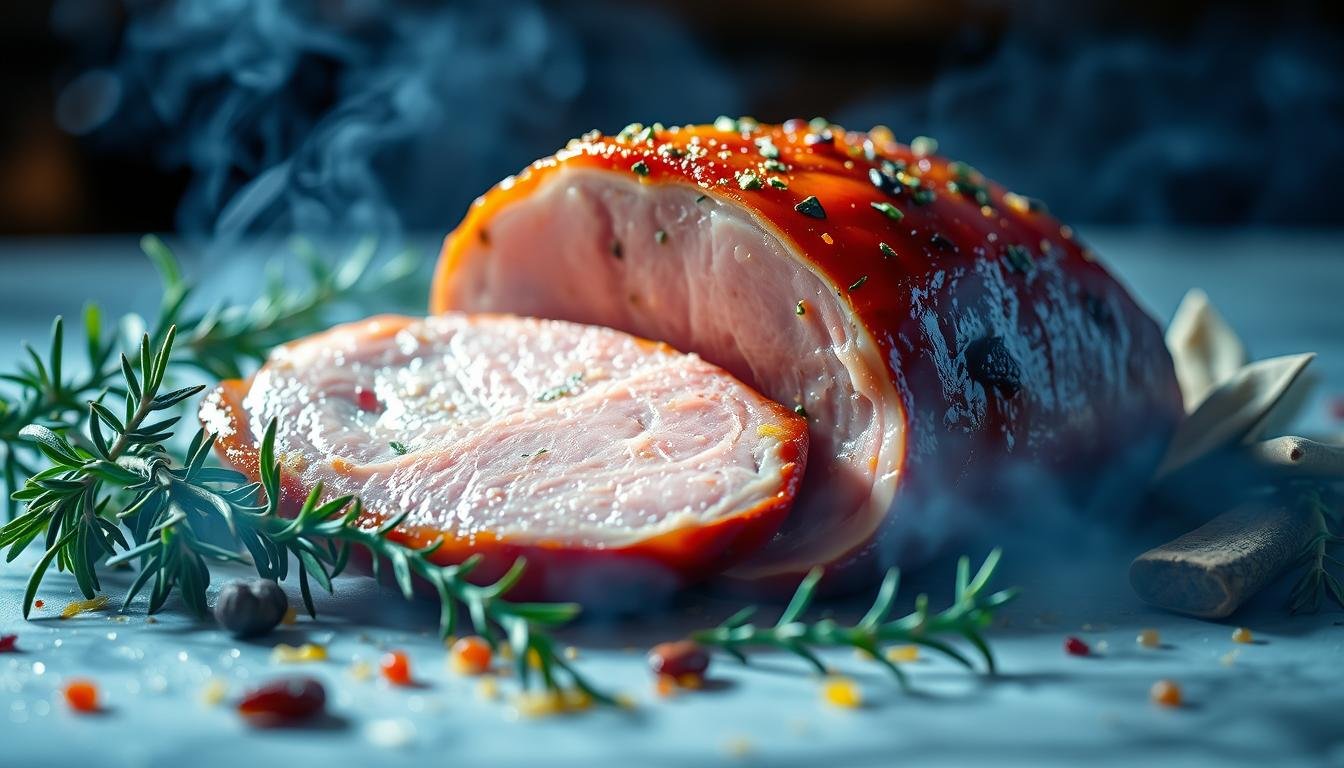
Preparing a gammon joint means scoring the fat into a diamond pattern 1 to 2mm deep, then coating it with a marinade of honey, wholegrain mustard, cider vinegar, brown sugar, ginger and chilli. Scoring helps the fat render and lets the glaze penetrate the meat.
Score with a sharp knife, making shallow diagonal cuts one way and then the other to form diamonds across the fat cap. Cut through the skin and fat but not into the flesh, which would let juices escape. Season the scored surface with salt, pepper and English mustard, working it into the incisions.
Build the glaze from a simple, balanced marinade:
- 2 tablespoons of honey
- 2 tablespoons of wholegrain mustard
- 1 teaspoon of apple cider vinegar
- 1 teaspoon of brown sugar
- 1 pinch of ground ginger and chilli flakes
Mix the marinade and slather it over the joint, pressing it into the scored diamonds. Leave the gammon to marinate for several hours, or ideally overnight, so the flavours absorb before roasting.
How long do you cook a gammon joint in the oven?
A gammon joint needs 30 minutes per 500g at 200°C, plus a 20-minute uncovered finish for the glaze. A 750g joint takes about 45 minutes, and a 2kg joint about 2 hours, followed by a 30-minute rest before carving.
The 30-Minutes-Per-500g Rule sets the covered roasting time at 200°C (400°F). A common alternative is 20 minutes per 450g plus an extra 20 minutes, which lands close for most joints. Use the weight guide below, then confirm doneness with a probe rather than the clock alone.
| Joint Weight | Covered Roasting Time at 200°C | Rest Before Carving |
|---|---|---|
| 500g | 30 minutes | 30 minutes |
| 750g | 45 minutes | 30 minutes |
| 1kg | 60 minutes | 30 minutes |
| 1.5kg | 90 minutes | 30 minutes |
| 2kg | 120 minutes | 30 minutes |
Check the core temperature at the thickest point. A reading of at least 68°C (155°F) confirms the gammon is cooked; the Food Standards Agency guidance of 70°C gives extra assurance for cured pork. Resting for 30 minutes lets the juices redistribute, so every slice stays moist.
A standard serving of oven-baked gammon carries the following nutrition, useful for planning a balanced plate:
| Nutrient | Amount per Serving | % Daily Value |
|---|---|---|
| Calories | 267 kcal | – |
| Total Fat | 7g | 11% |
| Saturated Fat | 2g | 13% |
| Cholesterol | 124mg | 41% |
| Sodium | 1580mg | 69% |
| Protein | 44g | 88% |
| Carbohydrates | 4g | 1% |
| Sugars | 3g | 3% |
| Iron | 1mg | 6% |
Gammon is high in salt, with a single serving supplying around 1,580mg of sodium, close to 69% of the daily reference intake. The NHS recommends adults consume no more than 6g of salt per day. Balance the plate with low-salt vegetable sides and avoid adding further salt at the table.
What do you serve with oven-baked gammon?
Oven-baked gammon pairs with roasted parsnips, glazed carrots, Parmentier potatoes, potato dauphinoise and mashed cauliflower. For wine, a medium-bodied Chardonnay or crisp Riesling cuts the salt, while a light Pinot Noir suits those who prefer red.
Choose sides that balance the salty richness of the ham. Roasted parsnips and honey-glazed carrots echo the sweet glaze, while mashed cauliflower offers a lighter, low-carb alternative to potatoes. Creamy potato dauphinoise and crisp domino potatoes add texture contrast, and homemade macaroni cheese remains a family favourite for larger gatherings.
Match the wine to the cure. A crisp Riesling or medium-bodied Chardonnay cuts through the fat and salt, and a light Pinot Noir gives a fruity counterpoint for red-wine drinkers. Leftover gammon extends into sandwiches, ham and cheese quiche, tagliatelle with ham, or a hearty pea and ham soup.
Our Take
Most gammon guides fixate on minutes per 500g and ignore the one number that matters: core temperature. A thin 750g joint and a dense 2kg joint behave differently under foil, so a probe thermometer beats any timing chart. The received wisdom that gammon must be boiled first to remove salt is outdated for modern supermarket joints, which are cured far more gently than the salt-barrel hams of the past. A 30-minute cold-water soak handles any excess. The real risk is not saltiness but a dried-out edge from uncovering the joint too early. Keep the foil sealed until the final 20 minutes, pull the gammon at 68 to 70°C, and rest it fully. That single sequence separates moist ham from a chewy one.
- Roast at 200°C (400°F) for 30 minutes per 500g under a tight foil tent.
- Uncover for the final 20 minutes to caramelise a honey-mustard glaze.
- Pull the joint at a core temperature of 68 to 70°C for safe, moist ham.
- Rest the gammon 30 minutes before carving to redistribute the juices.
- Soak an over-salty joint in cold water for 30 minutes before cooking.
- A 750g joint feeds four; a 2kg joint takes about 2 hours 35 minutes with rest.
Frequently Asked Questions
These questions cover the practical details that come up most often when roasting a gammon joint without boiling.
Do you need to soak a gammon joint before roasting?
Soaking is optional for most modern supermarket gammon, which is cured gently. Soak the joint in cold water for 30 minutes only if it tastes very salty, then pat it dry before scoring and glazing.
What is the difference between gammon and ham?
Gammon is the raw, cured hind leg of pork sold uncooked. Ham is gammon that has been cooked, whether roasted, baked or boiled. Roasting a gammon joint in the oven is what turns it into ham.
Can you cook a gammon joint in foil the whole time?
Keep the foil sealed for the bulk of the roasting time to steam the meat, then remove it for the final 20 minutes. The uncovered finish caramelises the glaze and crisps the fat, which foil alone cannot achieve.
How do you know when a gammon joint is cooked?
Insert a probe into the thickest part. A core temperature of at least 68°C, and ideally 70°C, confirms the gammon is cooked through. The juices should run clear and the meat should feel firm, not springy.
Can you reheat leftover gammon?
Refrigerate leftover gammon within two hours and eat it within three days. Reheat portions until piping hot, or serve it cold in sandwiches, quiche, pea and ham soup, or tagliatelle for quick second meals.
Sources
The following UK organisations informed the cooking, safety and nutrition guidance in this article.
- Food Standards Agency · food.gov.uk · Guidance on safe cooking temperatures and handling of pork and cured meats.
- NHS · nhs.uk · Eatwell advice on salt intake and eating processed and red meat in moderation.
- BBC Good Food · bbcgoodfood.com · Reference recipes and methods for roasting and glazing gammon joints.
- Which? · which.co.uk · Consumer advice on buying and judging the quality of meat joints.
- Delia Online · deliaonline.com · Traditional British techniques for preparing gammon and ham.