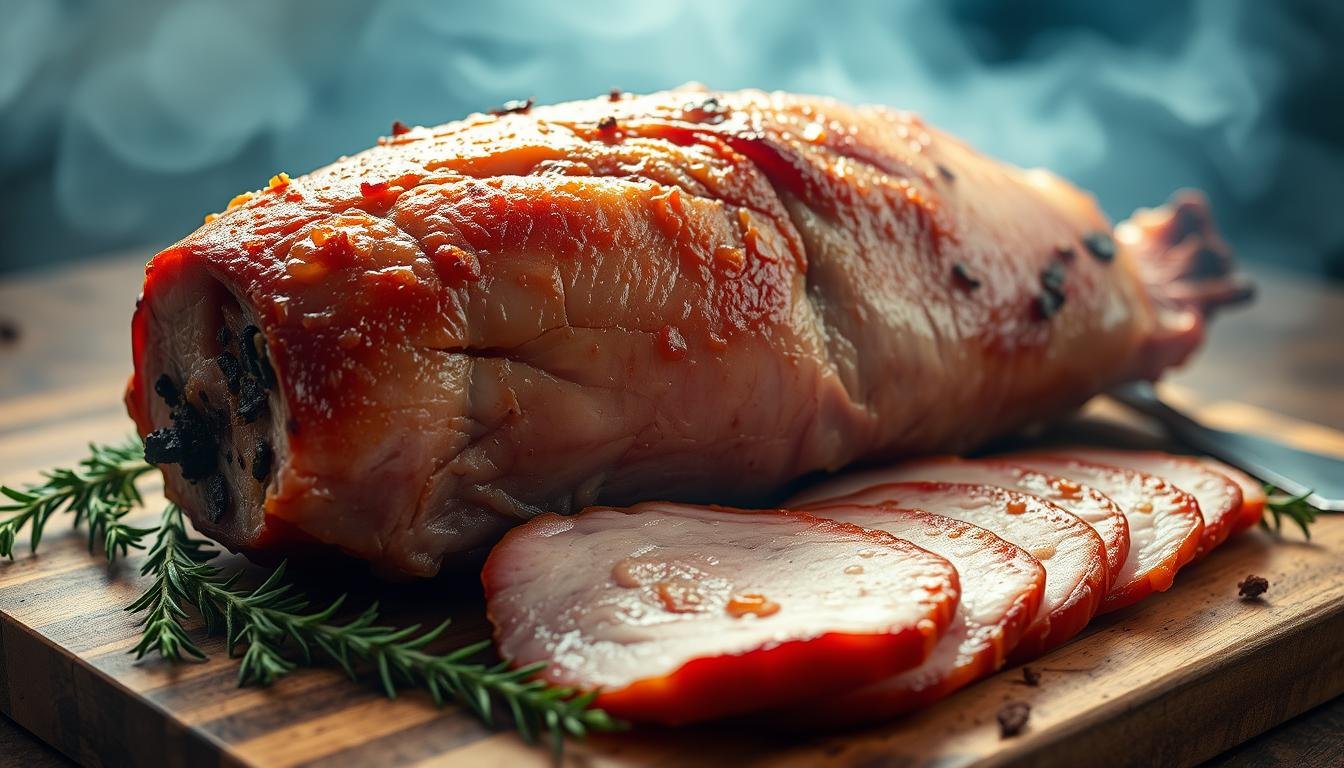
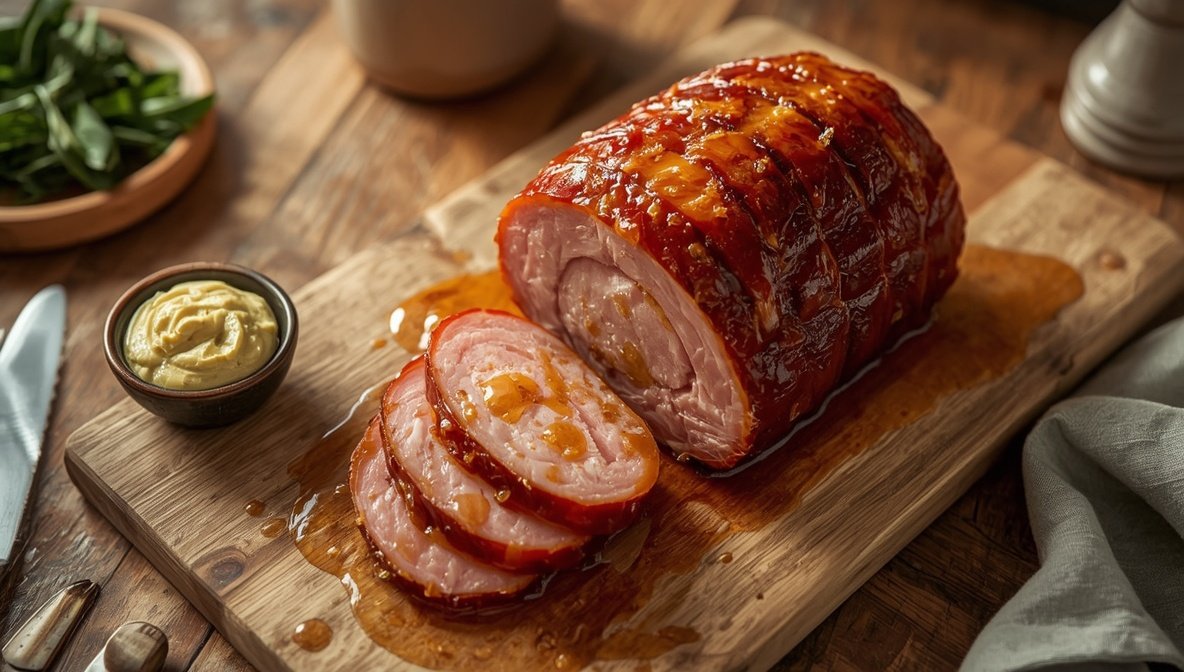
A boneless smoked or unsmoked gammon joint cooks in the air fryer at 160°C for 25 minutes per 500g, wrapped in foil for the first two-thirds of the time and finished uncovered with a sticky glaze for the last 10 to 15 minutes. The joint is ready when the centre reads 71°C on a probe thermometer. Rest for 10 minutes before slicing.
Quick Answer
Preheat the air fryer to 160°C. Wrap a boneless gammon joint tightly in foil and cook for 25 minutes per 500g (so 50 minutes for a 1 kg joint, 75 minutes for 1.5 kg, 100 minutes for 2 kg). In the last 10 to 15 minutes, remove the foil, brush with a honey-mustard or marmalade glaze, raise the temperature to 190°C, and cook until the outside is glossy and caramelised. The gammon is safe to eat once the thickest part registers 71°C.
Can you cook a whole gammon joint in an air fryer?
An air fryer will roast any boneless gammon joint up to about 2.2 kg, provided the basket fits it with 2 cm of air clearance on every side. Anything larger will not cook evenly and should be roasted in the oven. Bone-in gammon rarely fits and is better suited to a traditional roasting tin.
Do you need to soak gammon before air frying?
Modern supermarket gammon is cured mildly enough that soaking is not required. If the label says “mild cure” or “reduced salt”, cook straight from the fridge. For an unmarked or traditionally-cured joint, soak the gammon in cold water for two hours (or overnight for anything over 1.5 kg) to draw out excess salt before drying and cooking.
What temperature should the air fryer be set to?
Start at 160°C for the covered stage. This is hot enough to cook the joint through without drying the outside before the centre is done. Raise the temperature to 190°C for the final glazing stage so the sugars in the glaze caramelise into a shiny, tacky crust without burning.
How long does it take per 500g?
Allow 25 minutes per 500g at 160°C for the foil-wrapped stage. Add a further 10 to 15 minutes uncovered at 190°C for the glaze. A 1 kg joint therefore takes about 65 minutes in total; a 1.5 kg joint takes about 90 minutes; a 2 kg joint takes about 115 minutes. Always finish by probe temperature, not by clock alone.
What is the safe internal temperature for gammon?
Gammon must reach an internal temperature of 71°C in the thickest part, held for two minutes, to meet Food Standards Agency guidance for cooked pork. Use a digital probe thermometer inserted into the centre away from any bone. Under 70°C the meat is undercooked; over 78°C it becomes stringy and dry.
Expert Insight — Eleanor Hayes
“The single biggest mistake I see with air-fryer gammon is skipping the foil. People treat it like a chicken and blast it uncovered at 200°C from the start, and the outside dries out before the middle is even warm. Foil for the first two-thirds turns the basket into a mini steam-roaster, which is exactly what gammon needs, and it gives you a soft, slice-perfect texture. Only remove the foil once the probe reads around 60°C — then the glaze has just enough time to set without scorching.”
Do you need to preheat the air fryer?
Preheating for three minutes at 160°C is worth the small extra time. A cold basket adds five to seven minutes to the total cook and means the outside of the gammon steams in its own moisture before it starts to colour. A hot basket sets the surface fibres immediately, locking in the juice for a firmer slice.
Which glaze works best in an air fryer?
Sticky, sugar-based glazes work best because the compact, hot air of the fryer caramelises them in minutes. A three-ingredient glaze of 4 tablespoons honey, 2 tablespoons wholegrain mustard and 1 tablespoon dark brown sugar is the reliable default. Marmalade, maple syrup and cola reductions all work equally well. Avoid thin, watery glazes — they slide off the joint before they can set.
How do you stop the glaze from burning?
Glaze burns because the sugar sits directly on hot metal, not because of the air fryer itself. Apply the glaze only in the final 10 to 15 minutes, brush a thin first coat, wait five minutes, then brush a second coat. Sitting the gammon on a small square of baking paper inside the basket catches any drips and stops smoke.
Should you score the fat before cooking?
Yes. Score the fat cap in a 2 cm diamond pattern before wrapping in foil. Scoring lets the fat render into the meat as it cooks and gives the glaze a textured surface to cling to. Studs of clove into the scored corners are traditional but optional; they add fragrance without changing the cooking time.
Can you cook gammon from frozen?
Never air fry gammon from frozen. The outside will pass 71°C long before the centre thaws, creating a food-safety risk the Food Standards Agency specifically warns against for cured pork. Defrost the joint in the fridge for 24 hours per kilogram, then cook as normal from chilled.
How do you keep the joint from drying out?
Three habits keep gammon juicy: wrap in foil for the first two-thirds of the cook, pull it from the fryer at exactly 71°C rather than cooking “for another five minutes to be safe”, and rest under loose foil for a full 10 minutes before carving. Resting lets the muscle fibres reabsorb the juices instead of losing them onto the board.
What is the best way to carve gammon?
Rest the joint fat-side up on a wooden board. Trim off any butcher’s string, then slice at right angles to the muscle grain in 3 to 5 mm slices using a long, sharp knife. Thin, cross-grain slices eat tender and yield up to 20 per cent more portions than thick, with-grain cuts.
What can you serve with air-fryer gammon?
Air-fryer gammon slots naturally alongside jacket potatoes, parsley sauce, mustard mash, pease pudding, pickled red cabbage, or a simple pineapple-and-red-onion salsa. For a Sunday-style plate, keep the oven on for the potatoes and vegetables and let the air fryer handle just the gammon — it frees the oven shelves for everything else.
How do you store and reheat leftovers?
Cool leftover gammon within two hours, slice or leave whole, and store in an airtight container in the fridge for up to three days. Freeze for up to two months. Reheat sliced gammon in the air fryer at 150°C for 3 to 4 minutes, or eat cold in sandwiches, salads and pies. Never reheat gammon more than once.
How does air-fryer gammon compare with the oven method?
The air fryer roughly halves the cook time of a traditional oven joint (25 vs 40 minutes per 500g) and cuts energy use significantly for anything under 2 kg. The oven wins on capacity and on presentation for joints over 2 kg. For anyone comparing the two methods side by side, the Oven-Baked Gammon Joint: No-Boil Method guide covers the traditional route in full.
Our Take
Air-fryer gammon is one of the rare recipes where the newer appliance beats the traditional oven on every metric that matters — speed, tenderness, energy cost — without giving anything back on flavour. The two rules to remember are foil and probe. Foil for two-thirds of the cook, then probe until it reads 71°C. Every other detail (glaze, spice, side dishes) is personal taste, but those two habits turn a dry joint into a Sunday centrepiece.
Frequently Asked Questions
What size gammon fits in a standard air fryer?
Most 5 to 8 litre air-fryer baskets take a boneless gammon joint up to 2 kg with 2 cm of air clearance on every side. Larger dual-basket models can handle joints up to 2.5 kg. Bone-in joints rarely fit — use the oven.
Do you cover gammon in the air fryer?
Yes — for the first two-thirds of the cook. Wrap the gammon tightly in foil at 160°C, then remove the foil for the final 10 to 15 minutes at 190°C to glaze. Cooking uncovered from the start dries the outside before the centre is done.
Can you cook gammon steaks in an air fryer?
Gammon steaks cook uncovered at 190°C for 8 to 10 minutes, flipped once at the halfway point. No foil, no glaze required. The internal temperature must still reach 71°C in the thickest part before serving.
Why is the outside of the gammon black?
A blackened outside almost always means the glaze went on too early or the fryer was set above 200°C. Brush glaze only in the final 10 to 15 minutes and keep the temperature at 190°C for the finish. Blackened sugar is bitter and inedible.
Does air-fryer gammon taste boiled?
No. Because the foil traps steam only for the first two-thirds of the cook, the finish stage caramelises the outside into a dry, glossy crust. The result is closer to an oven roast than to a boiled ham.
Can you re-cook gammon that is still pink inside?
Yes. If the probe reads under 71°C after the glazing stage, re-wrap in foil and return to the fryer at 160°C for a further 5 to 10 minutes. Pink inside cured meat is not a safety issue on its own, but the 71°C rule is the Food Standards Agency threshold.
Key Takeaways
- Cook a boneless gammon joint at 160°C for 25 minutes per 500g wrapped in foil, plus 10-15 minutes uncovered at 190°C to glaze.
- The safe internal temperature is 71°C in the thickest part, verified with a probe thermometer.
- Score the fat in a 2 cm diamond pattern and apply glaze only in the final 10 to 15 minutes to avoid burning.
- Rest the joint under loose foil for a full 10 minutes before slicing to lock in the juices.
- Never cook gammon from frozen; defrost 24 hours per kilogram in the fridge.
- Slice thinly at right angles to the grain for up to 20 per cent more portions from the same joint.
Sources
- Food Standards Agency, “Cooking your food safely” — pork and cured meats, 71°C internal temperature guidance
- Food Standards Agency, “Defrosting food safely” — 24 hours per kilogram fridge defrost rule
- NHS, “Meat in your diet” — cooked pork guidance
- BBC Good Food, “How to cook gammon” — traditional oven method reference for comparison
- Which?, air fryer basket capacity testing (2024-25 model round-up)
Timings are for a fan-style basket air fryer at sea level. Convection ovens with an air-fry setting may need a further five minutes per 500g. Always finish by probe temperature.