Yorkshire puddings rise when a smoking-hot fat bath (220°C / 425°F oven, oil heated for at least 10 minutes) meets a well-rested batter of equal parts by volume: eggs, plain flour and milk. That thermal shock creates steam, and steam is what lifts them.
Quick Answer
Use equal volumes of eggs, plain flour and whole milk. Rest the batter for at least 30 minutes. Preheat beef dripping or sunflower oil in the tin at 220°C for 10 minutes until visibly smoking. Fill each hole one-third full and bake for 20–25 minutes without opening the oven door.
What is the classic Yorkshire pudding ratio?
The classic Yorkshire pudding ratio is equal parts by volume of eggs, plain flour and milk. One large egg (roughly 60 ml when cracked and beaten) is matched with 60 ml plain flour and 60 ml whole milk. This 1:1:1 ratio, popularised by Delia Smith and used by the Royal Society of Chemistry in a 2008 recommendation, produces a batter thin enough to rise sharply and set into a hollow, crisp shell.
For a 12-hole tin, use 4 large eggs, 240 ml plain flour and 240 ml whole milk. Weigh if you prefer accuracy: 4 eggs (about 200 g), 140 g plain flour and 240 ml milk. Add a pinch of salt. Skimmed milk works but produces a paler, less crisp finish; whole milk browns better because of its higher fat content.
Why does resting the batter matter?
Resting the batter for 30 minutes at room temperature, or up to 24 hours in the fridge, allows the flour’s starch granules to hydrate and the gluten to relax. Hydrated starch gelatinises more evenly in the oven, and relaxed gluten stretches instead of tearing. The result is a taller, more even rise.
A cold batter poured into scorching fat also amplifies the thermal shock that drives the rise. Rested batter should look smooth, with the consistency of single cream. If it has thickened in the fridge, whisk in a tablespoon of cold water before using.
How hot must the oven and fat be?
The oven must be at 220°C fan-off (200°C fan / gas mark 7) and the fat must be visibly shimmering or lightly smoking before the batter goes in. Beef dripping is traditional and reaches smoke point around 205°C; sunflower oil (smoke point about 227°C) is a good vegetarian alternative. Olive oil is unsuitable because it smokes too early.
Put roughly 1 teaspoon (5 ml) of fat in each hole of a 12-hole tin and slide it onto a preheated tray for at least 10 minutes. When you pour the batter in you should hear an immediate, aggressive sizzle. If you don’t, the fat is not hot enough and the puddings will be squat and greasy.
Expert Insight — Eleanor Hayes, home-food editor
The single mistake I see most often is opening the oven door in the first 20 minutes. Steam is doing all the lifting, and once you let it out the puddings collapse. Set a timer for 20 minutes, walk away, and only look through the glass. If they need another 5 minutes for colour, only then open briefly and shut fast.
Should the batter be at room temperature or fridge-cold?
Both work, but the greater the temperature gap between batter and fat, the sharper the rise. Fridge-cold batter poured into 220°C fat creates a violent flash of steam that inflates the pudding almost instantly. Room-temperature batter still rises well and is more forgiving for cooks new to the method.
If you rested the batter overnight, take it out 10 minutes before baking, whisk briefly to redistribute settled flour, and use straight from the jug. Never pour warm batter into hot fat — the temperature contrast disappears and rise suffers.
How full should each hole be?
Fill each hole about one-third full — typically 3 to 4 tablespoons of batter per hole in a standard 12-hole muffin tin. Overfilling produces heavy, cake-like puddings that sink in the middle. Underfilling gives small, over-crisp shells. A ladle or heatproof jug pours faster than a spoon, which matters because the fat cools each second the oven door is open.
How long do they take to bake?
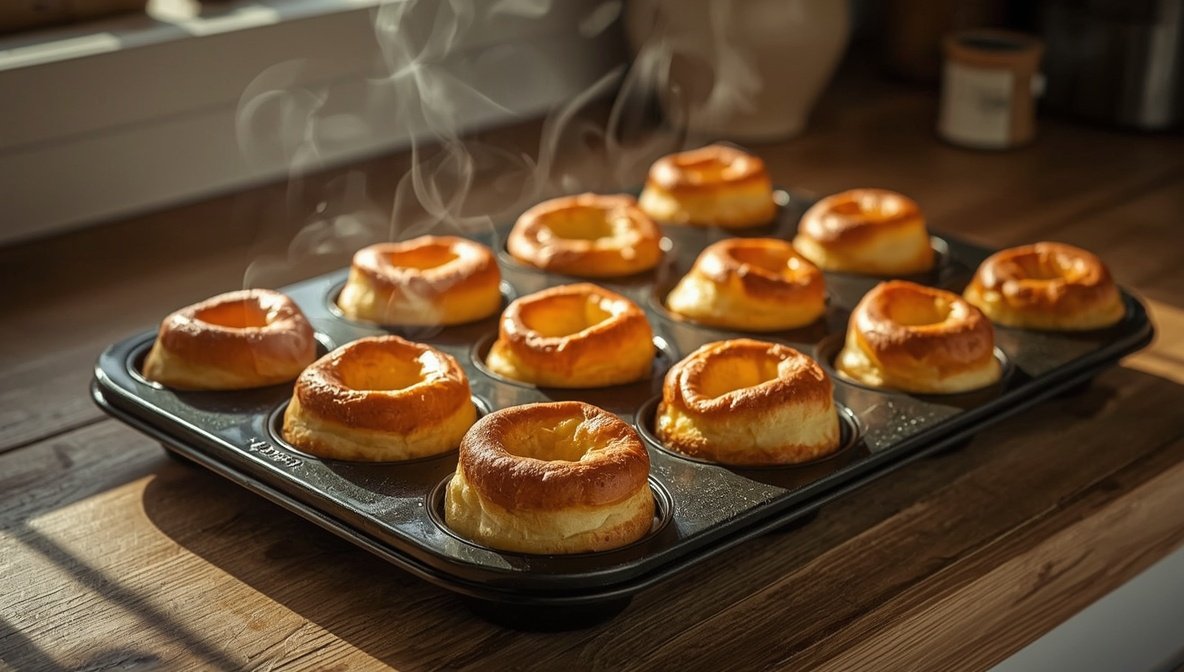
Bake for 20 to 25 minutes at 220°C, without opening the door for the first 20 minutes. Individual puddings in a 12-hole tin are usually done at 22 minutes; a single large pudding in a roasting tin needs 30 to 35 minutes. They are ready when they are deep golden brown, dry to the touch on the outside, and hollow-sounding when tapped.
If you like them extra-crisp, turn the oven up to 230°C for the last 3 minutes. Serve within 5 minutes of leaving the oven — they lose crispness quickly as steam inside the shell condenses.
Can you make Yorkshire puddings ahead?
Yes. Cooked Yorkshire puddings freeze well for up to one month. Cool completely, freeze in a single layer, then bag. Reheat straight from frozen at 220°C for 5 minutes on a wire rack — they crisp back up. This is how many pubs and carveries serve consistent puddings at Sunday lunch service.
Batter itself keeps in the fridge for up to 48 hours in a covered jug. Whisk briefly and check consistency before using.
Why did my Yorkshire puddings not rise?
Nine times out of ten it is fat temperature. The oil or dripping must be smoking before the batter hits it. Other common causes: batter too thick (should pour like single cream), oven not hot enough (buy an oven thermometer — UK domestic ovens routinely run 15°C cool), too much batter per hole, or opening the oven door too early.
Self-raising flour is not needed and can actually hinder rise, because the chemical leavening reacts before the oven heat has done its work. Plain flour is the correct choice.
Our Take
If you only change one thing in your Yorkshire pudding routine, buy a cheap oven thermometer. British domestic ovens are the single most common reason puddings fail, because a dial set to 220°C often reads 200°C or lower inside. Every other tip — rested batter, hot fat, no peeking — sits on top of getting the true oven temperature right.
Key Takeaways
- Ratio is 1:1:1 by volume: 4 large eggs, 240 ml plain flour, 240 ml whole milk feeds a 12-hole tin.
- Oven 220°C fan-off; preheat 5 ml of fat per hole for at least 10 minutes until smoking.
- Rest the batter at least 30 minutes at room temperature, or up to 24 hours in the fridge.
- Fill each hole one-third full — 3–4 tablespoons of batter, no more.
- Bake 20–25 minutes and do not open the door for the first 20 minutes.
- Freeze cooked puddings up to 1 month and reheat from frozen at 220°C for 5 minutes.
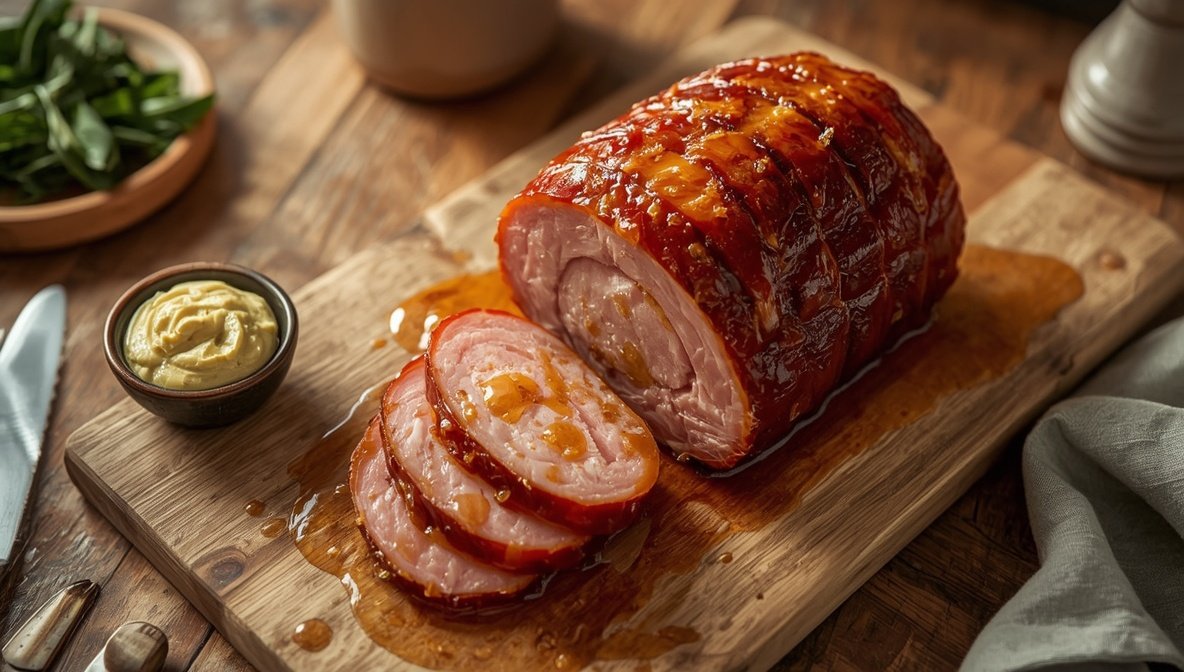
Yorkshire puddings are the classic partner to a Sunday roast, and pair particularly well with sliced gammon — our guide to the Oven-Baked Gammon Joint: No-Boil Method shows the technique that keeps the meat moist enough to serve alongside them without gravy overload.
Frequently Asked Questions
Can I use self-raising flour for Yorkshire puddings?
Plain flour is the correct choice. Self-raising flour’s chemical leavening reacts before the oven heat sets the structure, which tends to give a coarser, cake-like texture rather than a hollow, crisp shell.
What’s the best fat to use?
Beef dripping gives the most traditional flavour and produces excellent rise, with a smoke point around 205°C. Sunflower or vegetable oil (smoke point 227°C) is a reliable vegetarian alternative. Avoid butter and olive oil — both smoke before 220°C.
Why did mine sink after coming out of the oven?
Some deflation is normal within a minute of leaving the oven, as internal steam condenses. Dramatic collapse usually means they were underbaked — add 3 more minutes next time, and don’t remove them until they are deep golden and firm to the touch.
Can I make a dairy-free Yorkshire pudding?
Yes. Replace whole milk with unsweetened oat milk or soya milk in the same volume. Almond milk is too thin and produces poor rise. Use oil rather than dripping to keep the recipe fully dairy-free.
Does batter really need to rest overnight?
No. Thirty minutes at room temperature is enough for the starch to hydrate and the gluten to relax. Overnight resting adds a small amount of colour and depth of flavour but is not required for a good rise.
Sources
Royal Society of Chemistry, “The correct method for making Yorkshire puddings” (2008 press release). BBC Good Food, Yorkshire pudding recipe and technique guide. Food Standards Agency, egg safety and storage guidance (food.gov.uk). Delia Smith, How to Cook: Book One, batter chapter. National Measurement Office guidance on domestic oven accuracy (a common source of UK baking failures).